The Hidden Brain of Modern Vehicle Engine Cooling and Air Conditioning Systems
Modern vehicles no longer rely on simple "on/off" fans.
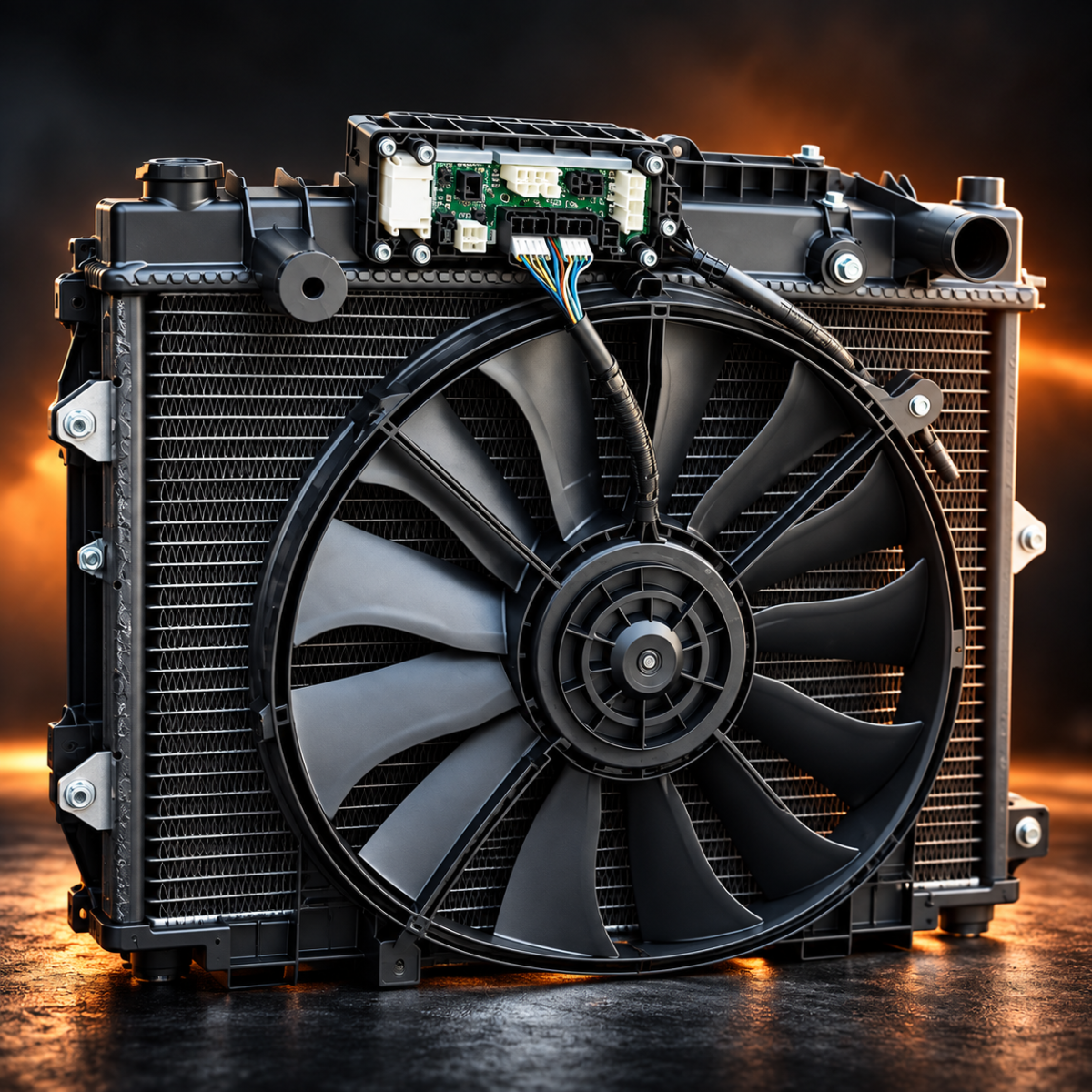
Smart fans equipped with a LIN Bus interface empower your vehicle with highly precise temperature control, lower fuel consumption, and a significantly quieter driving experience. This is no ordinary fan; it is an "intelligent steward" that communicates with the vehicle's ECU in real time
Imagine this:
When stuck in traffic on a scorching summer day, the cooling fan no longer spins frantically, wasting fuel. When the demand for air conditioning increases, the system automatically coordinates the condenser fan and the cabin blower, making the interior instantly comfortable yet nearly silent. This is the revolutionary change brought about by LIN Bus technology.
What is LIN Bus? Why Do Cooling Fans Need It?
LIN Bus (Local Interconnect Network) is a low-cost automotive communication protocol jointly developed by European automakers in the late 1990s. It is specifically designed to handle critical, smart control devices within a vehicle, such as power windows, windshield wipers, seat adjustments, cooling fans, and HVAC systems.
Core Features of LIN Bus
Single-Wire Transmission:
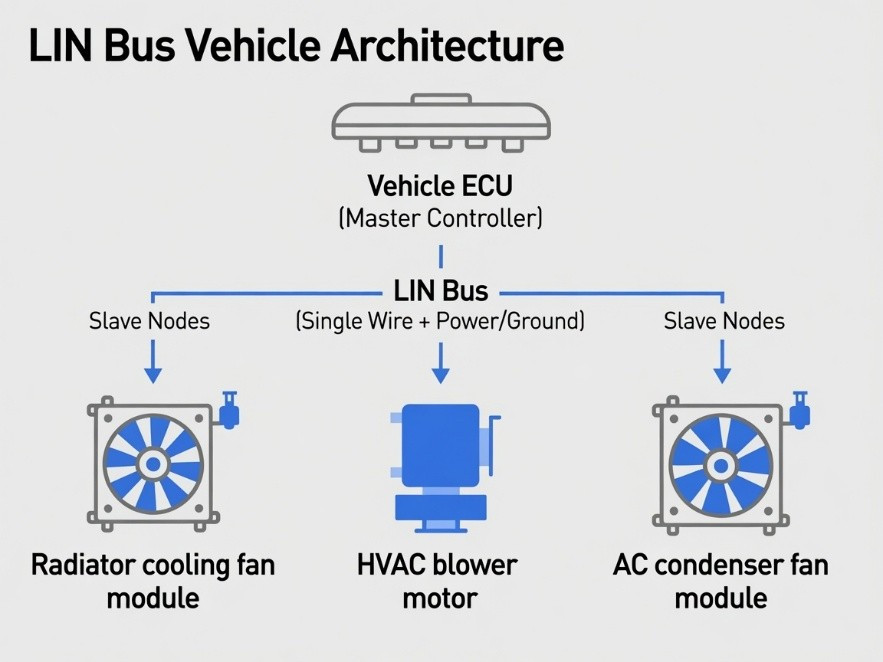
equires only one signal wire plus power/ground, which significantly reduces the weight and cost of the wiring harness.
Master-Slave Architecture:
The vehicle's ECU acts as the Master, actively sending commands, while the fan module serves as the Slave, continuously reporting its RPM, status, and fault information.
Low Cost & High Reliability:
Ideal for a large number of peripheral nodes while still providing comprehensive diagnostic and two-way communication capabilities.
True Variable Speed & Smart Control:
It's no longer just a simple on/off switch, but a complete system of commands and status feedback. This allows the system to deliver the exact fan speed required to lower temperatures without adding unnecessary load to the engine or increasing fuel consumption.
Real-World Case:
Several automotive groups have long widely adopted LIN Bus-controlled smart fan modules. This allows the cooling system to precisely adjust fan speeds based on multiple real-time data inputs—such as coolant temperature, vehicle speed, and air conditioning pressure—achieving both energy savings and noise reduction.
However, in repair shops, a very typical phenomenon frequently occurs: a "LIN communication fault."
When the LIN Bus signal is interrupted or behaves abnormally, the fan module will often enter a "Fail-safe" mode, causing the fan to spin wildly at full speed or stop running altogether. This happens not because the fan hardware itself is broken, but because modern fans have evolved from traditional "passive switches" into "smart modules that follow ECU commands."
Once the fan loses the correct instructions from the ECU, it defaults to the most conservative measure (running at full speed) to protect the engine and prevent it from overheating.
This also brings a crucial real-world implication:
During aftermarket replacement, the components must be fully compatible with the original OEM LIN communication protocol.
Even if a brand-new fan module is installed, if the communication protocol does not match, the vehicle will still experience the exact same issues of "spinning wildly at full speed" or "not running at all." This is exactly why LIN Bus fans have exceptionally high compatibility requirements in the aftermarket.
References and Real-World Repair Cases:
- ScannerDanner: BMW Radiator Fan LIN Bus Diagnostics(A professional automotive diagnostics training channel demonstrating the detailed diagnostic process for LIN communication faults)
- JustAnswer Expert Discussion: BMW LIN communication faults causing fan abnormalities.
- autogmt.com Technical Discussion: Common causes of LIN Bus fans running at full speed in European vehicles.
- Microchip Official Technical Document: Automotive Cooling Fan Reference Design(Explains the advantages of applying LIN Bus in modern cooling fans)
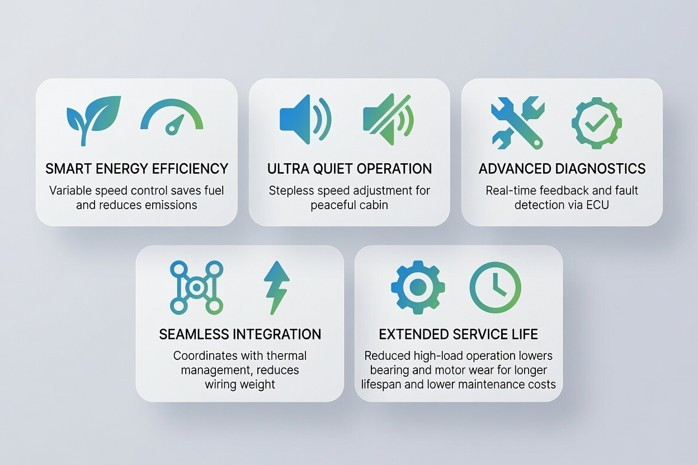
5 Core Advantages of LIN Bus Fans
FAQ
Q1: Why does a "LIN communication fault" or the fan spinning wildly at full speed still occur after installing a new LIN Bus fan module?
This is the most common aftermarket issue with LIN Bus fans. LIN Bus fan modules feature a built-in, dedicated LIN transceiver and microcontroller. To communicate properly, they must use the exact same LIN protocol version, Message ID, baud rate, and data format as the vehicle's ECU.
When the following situations occur, malfunctions will persist even after a new part is installed:
- The fan module has not undergone the OEM "Adaptation" or "Initialization" procedure.
- The LIN wiring harness itself has abnormal impedance, oxidation, or short-circuit issues (in which case, the new fan still cannot communicate properly).
- The fan enters Fail-safe mode: When the module fails to receive valid LIN messages from the ECU for a prolonged period, it automatically runs at full speed to protect the engine. This is an intentionally designed safety mechanism.
For professional purchasing, it is recommended to confirm the following items:
- Whether ECU adaptation is required: Some vehicle models require initialization using an OEM diagnostic scan tool after replacing the fan.
- Fail-safe behavior: Confirm whether the module's default behavior upon losing the LIN signal matches the original factory design (which is typically running at full speed).
Conclusion: The compatibility requirements for LIN Bus fans are significantly higher than those for traditional PWM fans. Simply matching the "shape, connector, and power" does not guarantee that the fan will work properly.
Q2: What are the fundamental differences in control logic between LIN Bus-controlled radiator fans and traditional PWM fans?
There is a clear distinction in the fundamental nature of how the two are controlled:
ITEM | Traditional PWM Fan | LIN Bus Fan |
Communication Protocol | Unidirectional PWM signal | Bidirectional digital communication |
Control Content | Can only control fan speed | Transmits speed commands; receives speed feedback, temperature, current, and fault codes |
Diagnostic Capability | Almost none | ECU can monitor status and health in real-time |
Fail-safe Mechanism | Typically a fixed speed or stopped | Designed to "run at full speed upon loss of communication" |
System Integration Level | Independent control | Deeply integrated with the vehicle's thermal management system (including active grille shutters and water pumps) |
Essentially, a LIN Bus fan is a "smart Slave node." It does not merely receive speed commands passively; it also actively reports its own status back to the ECU. This is why it can achieve more precise thermal management and lower overall energy consumption.
Currently, there are not many LIN Bus fan suppliers in the market that can truly deliver "plug-and-play" capability along with long-term stability. The price differences often reflect the completeness and accuracy of their protocol compatibility.
Need LIN Bus-compatible radiator fans, condenser fans, or HVAC blower modules?
Contact **AMIGO Auto Parts**,We provide high-quality aftermarket solutions for mainstream European, American, and Japanese vehicles, and we are here to assist you with any compatibility or technical issues.